
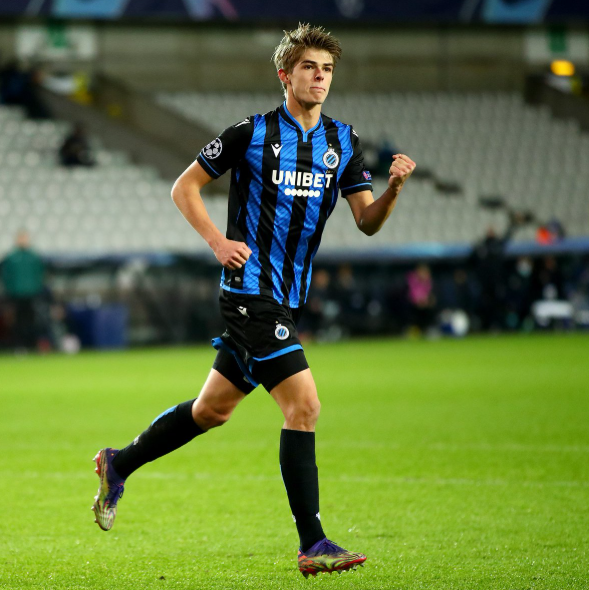
Charles De Ketelaere highlights the evolution of a technically gifted Belgian footballer who has steadily built his reputation in European competitions. The following is a summary of information from NobarTV about “Charles De Ketelaere Biography”, focusing on his development, versatility, and competitive influence. His journey reflects ambition, discipline, and tactical maturity at the highest level.
Early Life And Personal Background
Understanding the foundation of his career requires examining his upbringing, education, and early exposure to structured football systems that shaped his technical confidence and tactical intelligence from adolescence.
- Full Name: Charles De Ketelaere.
- Date of Birth: March 10, 2001.
- Place of Birth: Bruges, Belgium.
- Nationality: Belgian.
- Height: 1.92 meters.
- Primary Positions: Attacking midfielder, forward.
Growing up in Bruges, he joined local academies at a young age. His physical stature combined with ball control distinguished him among peers. Coaches identified not only technical potential but also spatial awareness rarely seen in developing players.
Youth Development Structure
His formative years were spent within the academy of Club Brugge KV, where structured training emphasized positional rotation. Instead of specializing early, he learned multiple attacking roles. This adaptability later became a defining characteristic in the Charles De Ketelaere narrative.
Academy competitions provided exposure to national youth tournaments. Competing against older age groups strengthened resilience and decision-making under pressure. These foundations prepared him for professional promotion.
Professional Debut Momentum
Breaking into the senior squad required patience. Once integrated, he demonstrated composure beyond his age. His early performances in domestic league matches reflected maturity in ball retention and intelligent movement between defensive lines.
European fixtures accelerated recognition. Facing continental opponents refined tactical awareness. Such experiences represent a pivotal chapter within Charles De Ketelaere Biography, marking transition from prospect to reliable contributor.
Club Career Progression In Europe
The move from domestic dominance to international challenge shaped the next phase of his journey. Competing in top leagues demanded adaptation to higher tempo and defensive intensity.
At AC Milan, expectations increased significantly. Transitioning to Serie A required tactical discipline and physical strength. Though adaptation included challenges, exposure to elite competition expanded his understanding of structured pressing systems.
Subsequently, a move to Atalanta BC offered renewed confidence. Within a fluid attacking system, he rediscovered rhythm and creative expression. His ability to link midfield transitions with forward penetration gained prominence again.
Tactical Adaptation And Role Flexibility
In Italy, he operated across multiple advanced positions. Coaches deployed him as a supporting striker, attacking midfielder, and occasionally drifting wide. This versatility enhanced team unpredictability.
Such adaptability stands central to Charles De Ketelaere Biography, reflecting modern football’s demand for multifunctional attackers. Rather than relying solely on flair, he demonstrated tactical obedience within structured systems.
Read more on NobarTV: https://nobartv.vip/klasemen-liga-inggris/
Performance Growth And Statistical Impact
Improved decision-making in final-third scenarios elevated productivity. Goals and assists increased as confidence stabilized. Beyond raw statistics, his off-ball movement created channels for teammates.
Analysts frequently highlight his pressing contribution and transitional awareness. These tactical elements enrich the broader narrative of Charles De Ketelaere, emphasizing substance beyond highlight moments.
Playing Style And Competitive Identity
Technically refined yet physically imposing, he blends creativity with spatial intelligence. His first touch allows rapid directional shifts, enabling penetration through compact defensive blocks.
Standing above many attacking midfielders in height, aerial duels become an additional asset. Despite stature, agility remains effective in tight spaces. This duality contributes to a unique competitive identity.
Vision plays a crucial role. He often scans defensive structures before receiving possession. Anticipating passing lanes increases tempo efficiency. Such composure supports controlled build-up phases.
In high-pressure matches, calm distribution maintains attacking structure. These attributes collectively strengthen the modern interpretation presented within Charles De Ketelaere Biography, where adaptability defines sustainability.
International Career And Future Outlook
Representing Belgium national football team introduced another dimension of responsibility. Competing alongside established internationals accelerated learning curves.
Tournament appearances demanded mental resilience. Balancing club commitments with national expectations tested physical endurance. Yet exposure to diverse tactical philosophies broadened understanding.
Looking ahead, consistency remains decisive. Continued growth in European competitions will influence long-term standing among Belgium’s emerging generation. With experience accumulating steadily, leadership potential appears increasingly plausible.
The trajectory outlined throughout Charles De Ketelaere indicates upward progression grounded in structured development rather than fleeting hype. Stability within competitive environments may determine ultimate legacy.
Conclusion
Charles De Ketelaere Biography reflects the disciplined rise of a versatile Belgian talent navigating Europe’s elite stages. From academy structure to international representation, each phase demonstrates calculated development and tactical evolution. Continued refinement of decision-making and positional balance could define his peak years, solidifying status as a modern attacking force in top-level football.