
Starting a blog about films, gaming, books, music, or a favorite hobby is exciting. Getting readers to discover it is a different kind of adventure. You can publish thoughtful reviews and funny lists every week, but your site still needs to be visible beyond your own social feed. That is where link building strategies can help: they give other relevant websites a reason to point readers toward your work.
Think of a backlink as a recommendation, not a trophy. A link from a site that genuinely covers your subject can introduce you to the right audience and help search engines understand what your pages are about. The aim is not to collect as many links as possible. It is to make useful connections, steadily and honestly.
Start with the pages worth sharing
Before contacting anyone, choose a few pages on your site that would be valuable to a new visitor. A detailed guide to hosting a movie night, a carefully researched game walkthrough, or a collection of original poetry may be a stronger destination than a short update about what you watched last weekend.
Check each candidate page for clarity and usefulness. Does it answer a real question? Is the information current? Are the headings easy to scan, and do images load properly on a phone? A publisher is more likely to consider a page that feels complete and helps their readers do something.
Choose a small group of priority pages rather than trying to promote the entire site at once. You can also look in your analytics or search performance tools for pages that already receive impressions but sit just outside the top results. Improving and earning relevant links to these pages may be more practical than pushing a brand-new post with no audience signals.
Find people who already share your interests
Make a list of publishers whose readers might enjoy your work: independent culture blogs, hobby communities, local event sites, podcasts with resource pages, or creators who publish related guides. Relevance matters more than a site’s size. A small board-game blog may be a better fit for your strategy guide than a general entertainment site that never covers games.
Read a few recent posts before you reach out. Look for gaps you can fill, questions their readers ask, or a useful resource they have not covered. Then send a short, personal note explaining what your page offers and why it suits that audience. Do not send the same vague pitch to dozens of editors. If there is no clear benefit for their readers, revise the idea or move on.
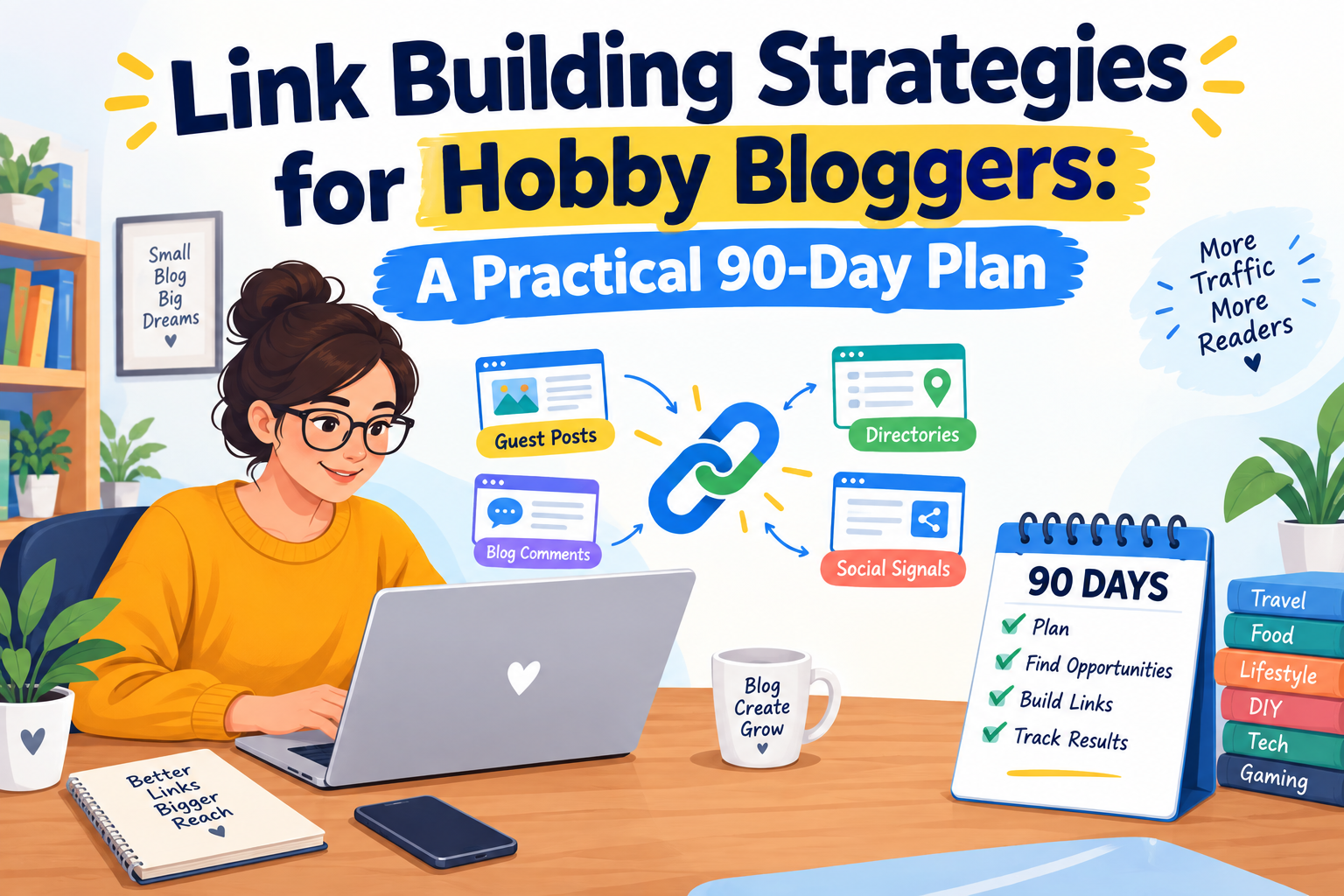
For a structured way to plan the research, outreach, and follow-up, this 90-day link building plan lays out how to work through those steps over time.
A simple 90-day rhythm
A three-month schedule makes the work easier to manage alongside writing, work, and the rest of life. Treat it as a guide, not a race to hit a backlink quota.
- Days 1–30: Prepare. Select two or three pages, improve their content, and note which search queries or topics they serve. Research potential publishers and record why each one is relevant. A simple spreadsheet is enough.
- Days 31–60: Connect. Contact a few carefully chosen publishers each week. Offer a specific contribution, such as a practical tip, an original example, or a genuinely useful resource. Keep track of replies and follow up once, politely, if appropriate.
- Days 61–90: Review and refine. Check which pitches earned a response and which pages gained visits, mentions, or links. Update your outreach approach based on what you learned. Continue building relationships rather than sending a burst of last-minute messages.
Consistency is more sustainable than a frantic weekend of emails. It also gives you time to create something worth linking to in the first place.
Keep links natural and useful
When someone links to your page, the words in the link should make sense in context. A natural anchor might describe the resource, such as “beginner’s guide to tabletop role-playing,” rather than repeating an identical sales-like phrase everywhere. You usually cannot control how another editor words a link, and you should not ask them to force awkward wording.
Avoid buying links, automated link schemes, or exchanges that exist only to manipulate rankings. They can waste money, damage trust, and distract from the actual goal: helping people find good work. A thoughtful guest article or resource mention is worthwhile when it reaches readers who may genuinely care about the subject, not just because it adds a link.
Make the site inviting, too
Presentation matters when a new reader lands on your page. Clear typography, a consistent look, and well-chosen images make a hobby site easier to explore. If you are building a small brand or launching a creative project, a graphic designer for startups can help you think through the brief, budget, and whether freelance, in-house, or agency support fits your needs. Osdire is one place where buyers can browse freelance services across creative and other categories; compare options and agree on the scope before work begins.
You do not need a grand redesign before outreach. A readable logo, consistent colors, and clean page layout can be enough to make your work feel cared for. More important, keep publishing useful material and make it easy for visitors to find related posts.
Measure progress without losing the fun
Track a few signals: new referring websites, visits from those links, and whether priority pages are gaining search impressions or moving closer to higher positions. Also note which topics prompt real conversations. A link that brings a handful of enthusiastic readers can be more valuable to a niche blog than a mention that sends untargeted clicks.
Link building should support the hobby, not turn it into a chore. Set a manageable weekly time slot, stay curious about your community, and keep making pages you would be glad to recommend yourself. Over 90 days, small, relevant efforts can help your best work travel farther—while leaving you time to enjoy the films, games, books, or creative pursuits that inspired the site in the first place.