
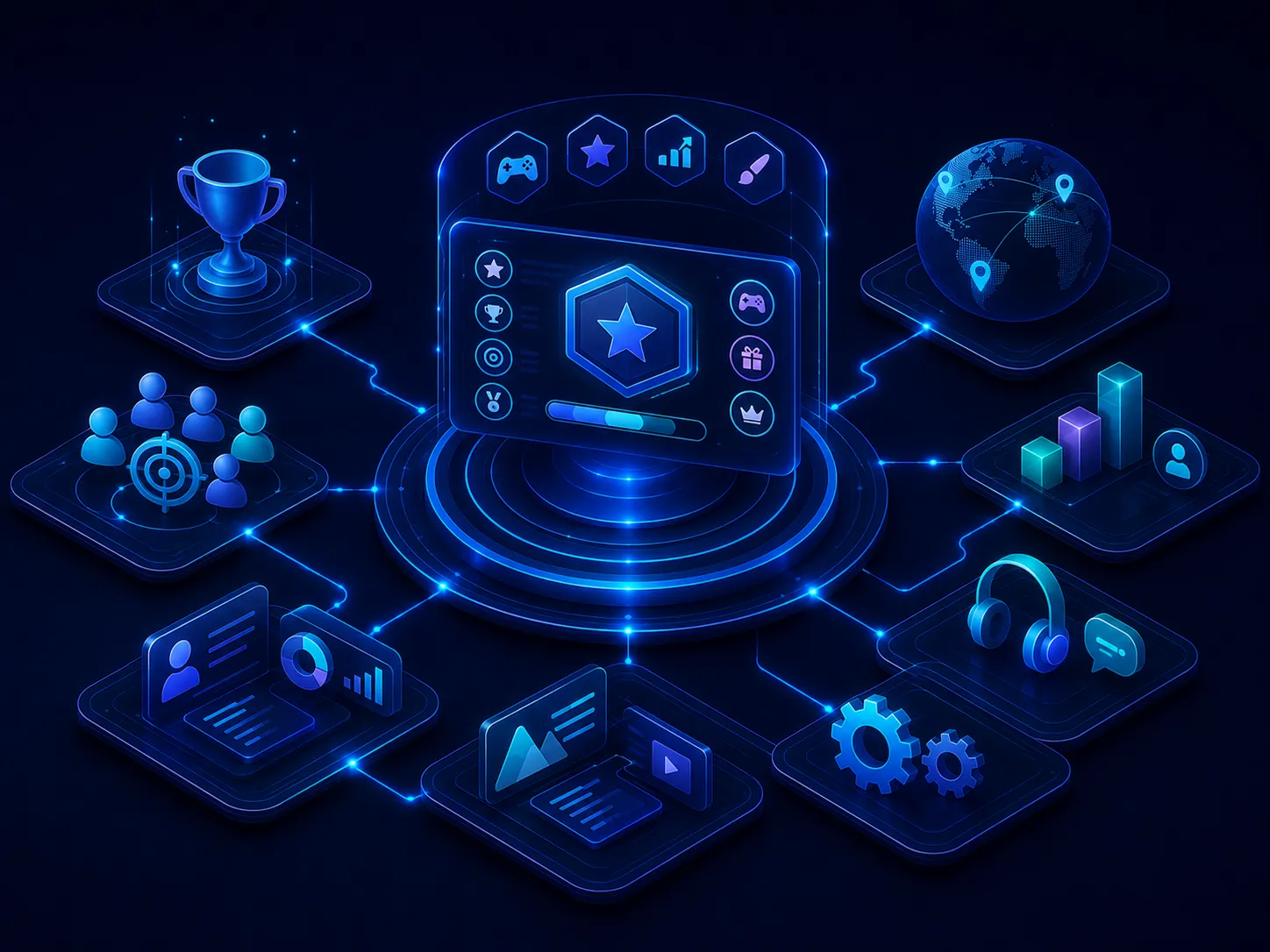
Gamification and design capabilities have become part of how iGaming platforms shape product rhythm, user journeys and day-to-day engagement work. The topic is no longer limited to visual elements placed on top of an existing product. It now sits closer to platform structure, CRM logic, content flow, localisation, reporting and operational control.
For B2B operators, this makes the provider model more important. A platform can include engagement features, yet still leave the operating side with fragmented workflows. A more coherent setup connects progression mechanics, design configuration, audience logic and platform management inside the same environment. That connection gives engagement work a clearer place in ordinary platform operations.
The important point is how these capabilities behave after launch. They need to remain manageable when product activity changes, when local content needs adjustment and when engagement planning moves across several workstreams. A provider model that connects design, CRM and platform operations can support that rhythm with less friction.
Gamification as Part of the Platform Environment
Gamification capabilities are most useful when they are integrated into the wider product environment. Levels, missions, challenges and progress indicators need to fit the user journey, the content structure and the timing of product activity. When these elements are disconnected, they can become hard to maintain and difficult to align with broader engagement planning.
A platform-level approach gives gamification a more stable role. Product activity can be planned around recurring interaction points, while CRM and content workflows support the same engagement direction. This helps operators avoid treating gamification as a separate surface layer that needs constant manual coordination.
Design also matters because users experience engagement through interface clarity. Progression mechanics need to be visible, readable and consistent with the broader product environment. The design layer should support interaction without overloading the front-end experience or making the journey harder to follow.
Design Capability and Product Rhythm
Design capability affects how engagement feels across repeated product use. A clean interface can make progression easier to understand, while a fragmented design layer can make even useful mechanics feel separate from the main journey. This is why gamification and design are closely connected in platform planning.
Product rhythm is also part of the same discussion. iGaming products move through active periods, quieter windows, campaign cycles and local content updates. Engagement tools need a structure that can support those shifts without requiring a full rebuild of the experience each time product activity changes.
In practical terms, design capability means more than a set of visual templates. It includes how progression is displayed, how journeys are paced, how local content is presented and how engagement states are managed across the platform. These details shape whether the product remains easy to understand as activity develops.
CRM, Segmentation and Content Operations
Gamification and design capabilities gain more operational value when they connect to CRM, segmentation and content operations. Audience groups may respond to different pacing, message timing and engagement routes. A platform structure that connects these elements can support more relevant journeys without creating unnecessary operational load.
Content operations also need to remain manageable. Engagement activity often depends on campaign assets, local presentation, front-end updates, journey copy and reporting follow-up. If these areas move through separate workflows, coordination becomes heavier than the product idea itself. A connected platform model keeps content and engagement planning closer to daily management.
Reporting completes the loop. Engagement work needs visibility into what is live, what has changed and how journeys are performing. The value is not only in data access. It is in having enough operational clarity to make the next update without losing context across content, CRM and design workflows.
This is where design capability becomes operational rather than decorative. When CRM logic, content work and reporting are connected, engagement planning can develop through repeatable platform routines. Each cycle becomes easier to adjust because the working context remains visible.
Provider Models and Operational Manageability
iGaming platform providers can place gamification and design capabilities in different parts of the delivery model. Some treat them as add-on functionality, while others position them as part of the platform environment. The operational difference becomes visible after launch, when content, configuration, CRM and support activity need to move through repeatable workflows.
Operational manageability is therefore a central part of the provider discussion. The platform should make it clear how engagement features are configured, how design updates are managed, how local adjustments are coordinated and how support paths work when product activity changes. Without that structure, even a broad feature set can become difficult to use in daily operations.
A practical provider model keeps the engagement layer close to the systems that manage user journeys, content and reporting. This gives operators a clearer route from planning to implementation and from implementation to ongoing adjustment. It also reduces the gap between creative engagement planning and the platform work required to keep that planning active over time.
This structure also helps keep engagement work understandable for product, CRM and operational functions that depend on the same platform view. Design updates, journey changes and reporting review can move through the same working environment, which makes the engagement layer easier to maintain as platform activity expands across markets and audience groups.
Soft2Bet and MEGA in the Platform Context
Soft2Bet’s public platform positioning includes CRM capabilities, localisation, operational support and MEGA as a gamification and design layer. In this context, MEGA gives engagement a defined place inside the broader platform model, with progression mechanics and design configuration connected to the wider product environment.
This framing is relevant because gamification depends on more than visible mechanics. It also depends on the platform structures that support content updates, audience logic, journey pacing and operational follow-through. When these areas are connected, engagement activity can remain part of the platform rhythm rather than a separate project around it.
For B2B iGaming operations, the value of this model sits in the connection between product experience and platform management. Gamification, design, CRM and localisation can support the same operating picture when they are planned as connected layers.
Gamification and Design as an Operating Layer
Gamification and design capabilities now sit close to the operating model of iGaming platforms. They influence how users move through the product, how engagement cycles are planned and how platform activity remains understandable over time.
A clear platform structure gives these capabilities a practical role. It connects progression mechanics with design clarity, CRM logic, local content, reporting and support workflows. In that form, gamification becomes part of platform operations, while design helps make the engagement journey readable across repeated use. This keeps the capability grounded in daily work.